Product · Brand Sensing
Amicus Social Research

An AI observatory
for brand sensing.

A continuously running room of AI specialists watching your brand across every platform, every format, every signal — and surfacing the few that matter.

Why it matters

Existing social listening was built for a world that no longer exists.

Three structural limits keep traditional tools from doing the work brands actually need.

01

They listen to words. Brands live in pictures.

More than half of social content is now image, video, and audio. Logos appear in TikToks that never tag the brand. Sentiment is carried in a tone of voice, not a sentence. Text-only listening sees less than half the conversation — blind by design.

02

They describe. They do not decide.

12,400 mentions this week with net sentiment +23% is a description, not an answer. The team still has to sit in a room and figure out what to do. Counting is not analysis. Analysis is not a decision.

03

The alert arrives after the crisis.

By the time a sentiment dashboard turns red, the story has moved. Press has called. Customers have screenshot. Damage is no longer prevention — it is repair. Most tools are reactive by definition.

How it feels to use

Open the observatory. The brand is already mapped.

A branding agent has clustered the week's mentions by attribute and persona. A marketing agent has named the two campaigns that outperformed and the one that quietly underperformed. A customer experience agent has flagged a complaint cluster up 400% week-over-week. A competitive agent has noticed that a rival is being credited for a feature you actually own.

You don't read a dashboard. You read a brief. When something matters, you are told. When something is about to matter, you are told earlier.

Image placeholder · 16:10 screenshot

The brief view — top headline ("This week, in one read"), 3–4 prioritized findings written as plain sentences, each with provenance (source, volume, evidence link), a "what to do" recommendation, and a small chart per finding.

Image-gen prompt
UI screenshot mockup of a "brief view" dashboard for an AI brand-sensing tool. Clean minimal SaaS interface, light theme with brand colors electric-blue (#1e90ff) and vivid-indigo (#5b3df5). Top bar: brand name "Acme Coffee", date "Week of May 12", agent count "5 specialists", a small "Live" pulse indicator.

Main pane: a vertically stacked "this week's brief" — 4 finding cards in chronological order of importance. Each finding card has:
- a small role-tag pill in monospace ("BRANDING", "CRISIS", "MARKETING", "COMPETITIVE"), color-coded
- a one-sentence headline in Space Grotesk medium (e.g., "Complaint cluster about delivery times grew 400% — investigate now", "Spring campaign outperformed forecast by 28%")
- two or three lines of evidence with small inline chips ("212 mentions · TikTok + X", "Confidence: high", "vs. competitor: −12%")
- a small sparkline or bar chart on the right
- a subtle "Open evidence →" link

Right rail: a vertical "agents at work" panel listing 5 specialist agents with status dots ("scanning", "verified finding", "watching"). Bottom: a faint divider with "Next sync in 14 min".

Generous whitespace, JetBrains Mono for monospace tags, Space Grotesk for body. 16:10 aspect. Avoid: real brand names, stocky dashboard clichés, gauges, speedometers, busy gradients.

The architecture

Not one model. A whole team of them.

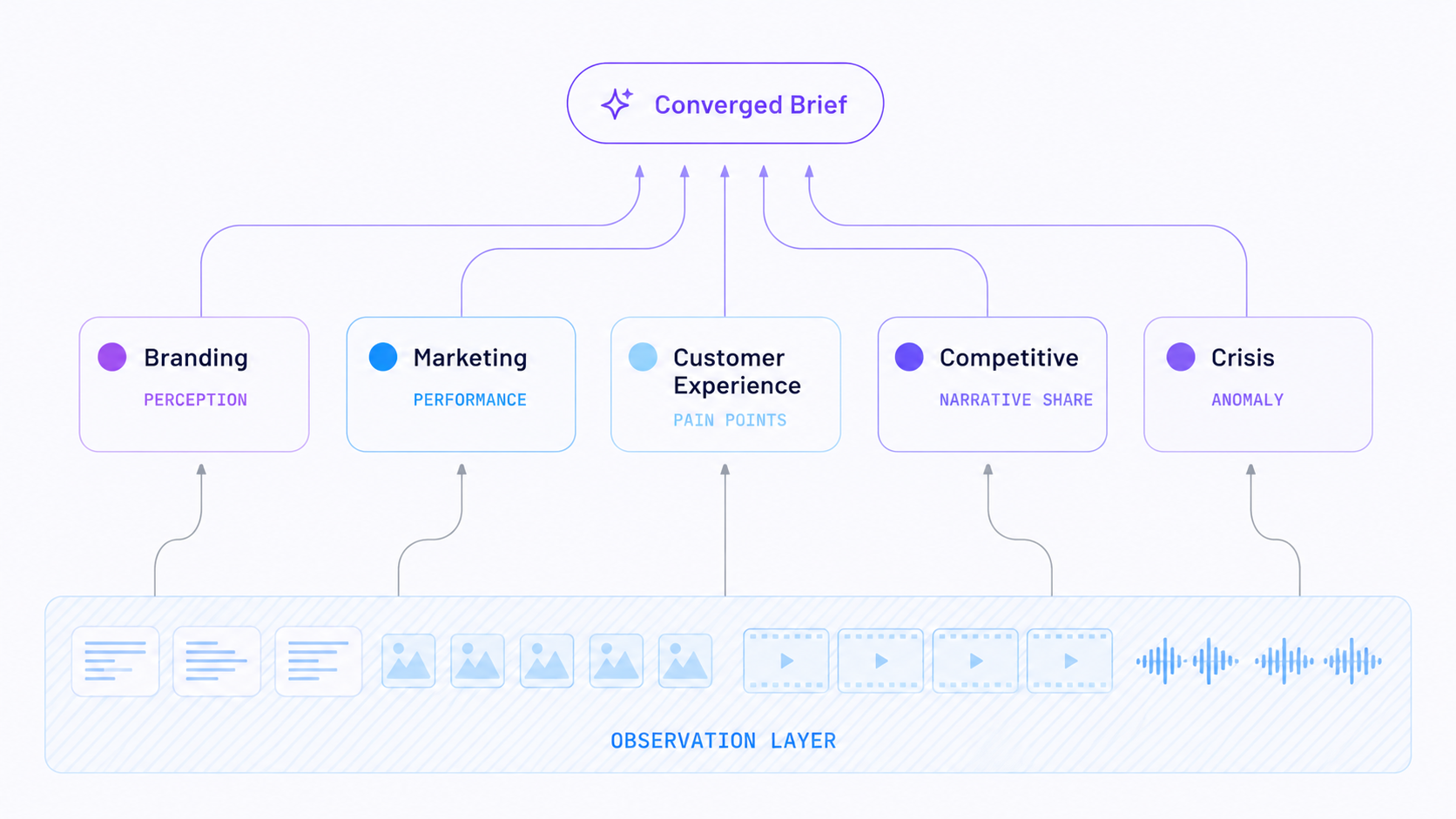
A single LLM asked to summarize a brand will average everything into a paragraph. Average is not useful. Amicus runs a swarm of specialist agents over the same observation layer. Each one looks at the data through a different lens. Agents share evidence, they disagree, and their outputs converge into a brief — not a single number.

Five specialist agents (Branding, Marketing, Customer Experience, Competitive, Crisis) reading a shared observation layer of multimodal signal — each through a different lens, with outputs converging into a single brief.
Branding agent

Perception & positioning

Attribute drift, perception clusters, positioning relative to category — how the brand is understood, not just how often it's named.

Marketing agent

Content performance

Engagement DNA, campaign reception, audience response patterns — which content actually moves the room, and why.

Customer experience agent

Pain & satisfaction

Pain points, journey-stage detection, satisfaction signals — extracted from real language, not survey approximations.

Competitive agent

Narrative share

Gap analysis, counter-positioning, attribute capture — what story rivals are winning that you should not be losing.

Crisis agent

Anticipatory alerts

Anomaly detection, emotion-intensity scoring, virality-trajectory modeling — early warnings before a story breaks.

Multimodal sensing

Sensing, not just listening.

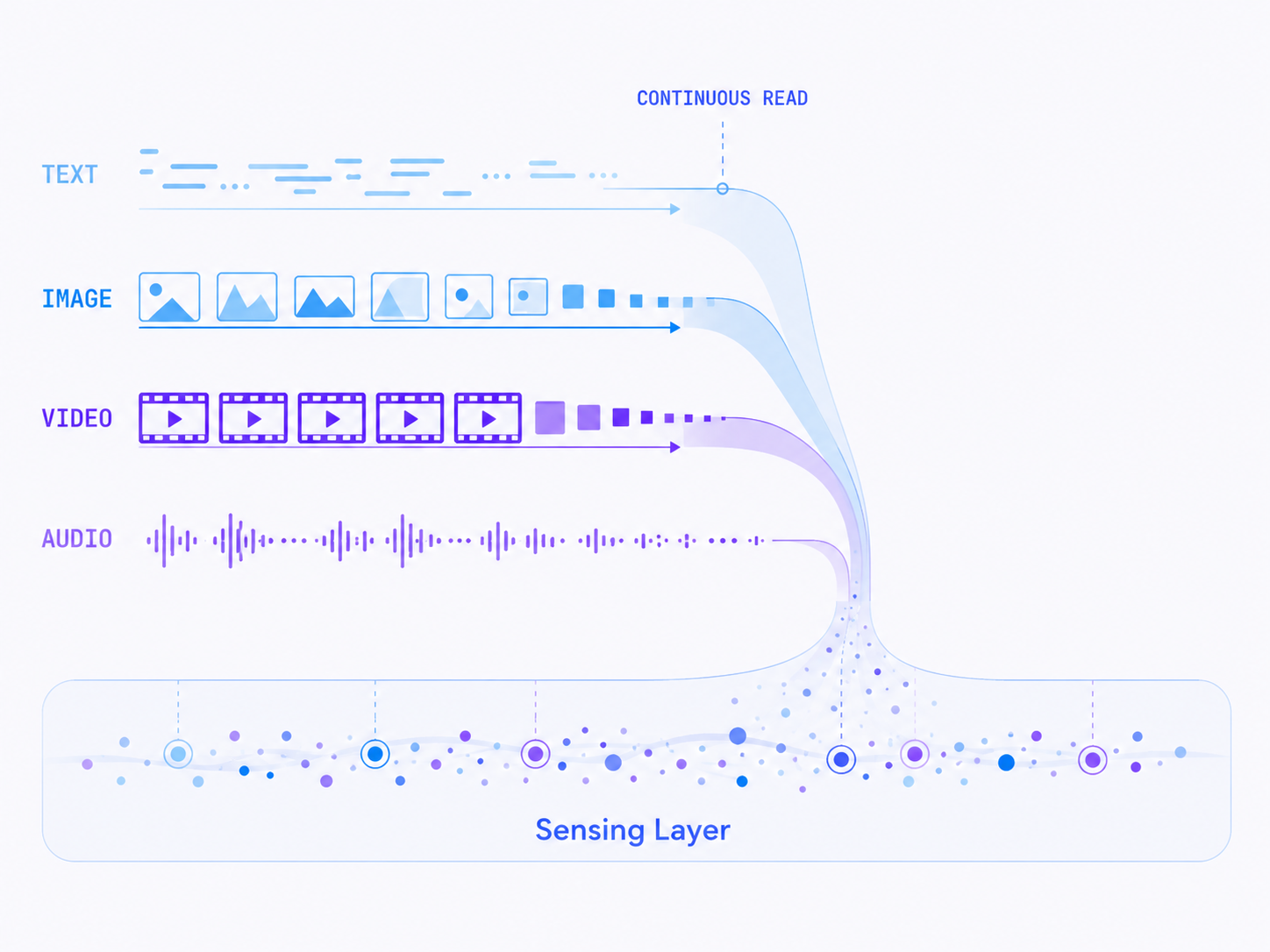
Most of what is said about a brand on social media today is not written. Amicus reads text, image, video, and audio as one continuous signal — so the conversation is fully heard, not half-captured.

  • Text — captions, comments, replies-to-replies, articles, transcripts (the obvious half)
  • Image — a logo visible in a user-generated TikTok with no brand tag is still counted; product photos are recognized in context
  • Video — product placements in vlogs, in-frame text overlays in Reels, scene context in TikToks are read as signal
  • Audio — tone of voice in a video review is measured for sentiment, not just the caption beneath it

The result is a sensing surface that catches conversations text-only tools miss entirely — and that grades sentiment from how something is said, not just what is said.

Four modality streams — text, image, video, audio — funneling into one continuous sensing layer, with the merged band carrying a unified pulse where signals are colored by source modality.
Two ways to look

By keyword. Or by channel.

Two research modes covering the questions brands actually ask: how is my topic being discussed across the internet, and how does this specific audience actually think and talk.

Mode · Research by keyword

Track a topic, brand, product, or phrase across every platform at once.

  • Cross-platform pull, deduped across sources, presented as one coherent view.
  • Trend, sentiment, and narrative tracked over time on a single timeline.
  • Persona and journey-stage clustering of the conversation itself.
  • Custom keyword sets — track brand, category, and competitor in parallel.

Best for — brand health monitoring, campaign tracking, category landscape, crisis surveillance.

Mode · Research by channel

Go deep on a specific page, account, or community.

  • Reads the channel in full — posts, comments, replies-to-replies, images, video.
  • Builds a profile of how a single audience actually thinks and talks.
  • Language clusters, persona segments, recurring themes specific to that community.
  • Works on competitor pages, fan communities, and partner accounts alike.

Best for — competitor profiling, target-community study, partnership briefings, audience deep-dives.

Customizable categories

Your brand. Your categories. Not ours.

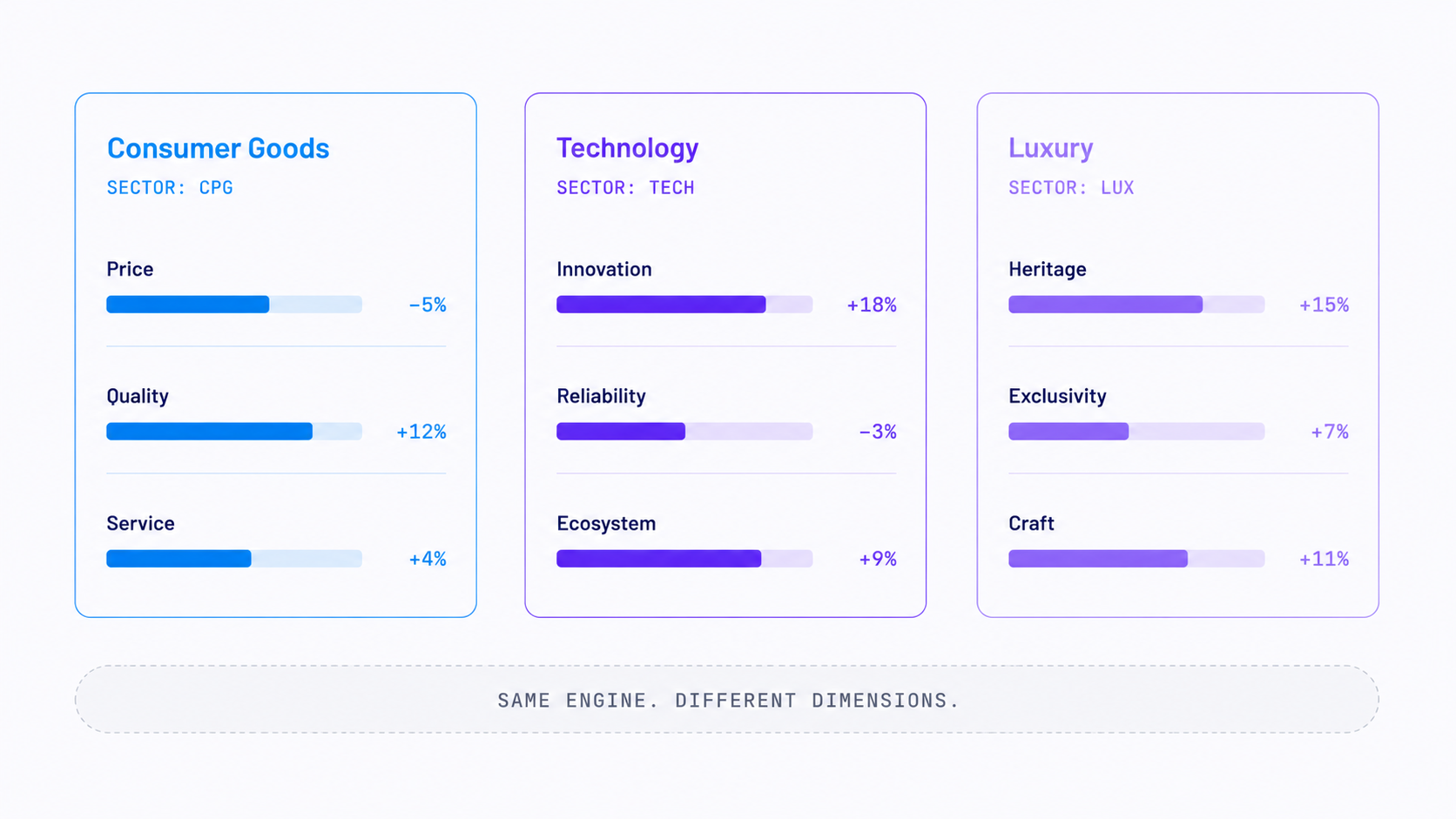
A consumer-goods brand cares about price, quality, and service. A technology brand cares about innovation, reliability, and ecosystem. A luxury brand cares about heritage, exclusivity, and craft. The same listening template cannot serve all three. Amicus lets each brand define its own dimensions — the slices along which conversation is scored and tracked over time.

Three side-by-side brand schemas — Consumer Goods (Price, Quality, Service), Technology (Innovation, Reliability, Ecosystem), Luxury (Heritage, Exclusivity, Craft) — each with its own labeled dimensions and attribute-score bars. Caption: Same engine. Different dimensions.
Personalized dashboards

Same engine. Different rooms.

The dashboard is designed for the business that signs in — and for the role of the person reading it. Same underlying signal, presented in the form each role actually needs.

CMO view

Monthly brand health, year-over-year trend.

A single executive read. No analyst needed to translate it. Direction, not detail.

Brand manager view

Attribute drift and competitive narrative.

Where the positioning is landing, where it is slipping, and which rival is making ground on which dimension.

PR lead view

Crisis console with anticipatory alerts.

Hours-ahead warnings, counter-narrative tracking during controversy, influencer reach and authenticity maps.

Insight team view

Personas, journey stages, language clusters.

Real audience language, real journey signals, real pain extraction — not survey approximations.

Built for

The five roles who actually need to know.

Chief Marketing Officers

A monthly read that does not require an analyst.

Brand health brief, category share of voice with directional context, strategic-risk early warning. Signal, not spreadsheet.

Brand Managers

Know if positioning is landing — and where it drifts.

Attribute map vs. competitors updated weekly, persona-level campaign reception, white-space identification.

PR & Communications Leads

A head start on what is about to break.

Anticipatory crisis alerts in hours, counter-narrative tracking during controversy, influencer authenticity and reach mapping.

Insight & Research Teams

Real language, real personas, real journey signals.

Audience persona clustering from social text, customer journey stage detection, pain point and win/loss extraction at scale.

Agency Strategists & Planners

You brief in days. You need ground truth in hours.

Category landscape with white-space topics, audience persona briefs ready to insert into a deck, competitor narrative audit.

What you take away

Five things, on every brand, continuously.

01

Continuous monitoring

Always-on background sensing across every platform you track. The observatory does not sleep.

02

Anticipatory alerts

Crisis and trend signals delivered before they peak — early warning, not post-mortem.

03

Decision-ready briefs

Written summaries that name the action, not just the data. Read it and decide; don't read it and assemble.

04

Multimodal evidence

Image, video, and audio surfaced alongside text — the half of the conversation other tools miss.

05

Custom category schema

The slices that matter to your brand, not someone else's. Schema is configured per business, not fixed.

Every signal is traceable to source. Every alert is auditable. The observatory is built to be trusted.

How Amicus is different

A different posture toward the same signal.

Traditional social listening counts what's already loud. Amicus reads what's about to matter — across every modality, with a panel of specialists, in a form ready to act on.

Traditional social listening Amicus Social Research
What it sees Text mentions only Text, image, video, and audio as one signal
What it produces Dashboards with metrics Briefs with decisions named
When it alerts After the trend is visible Before — based on early signals and emotion intensity
How it analyzes One model averaging everything A swarm of specialist agents reading different lenses
How it categorizes One template for everyone Custom schema per brand
What it costs to use Analyst hours to interpret Built to be read directly by the role that needs it
The Amicus suite

A family of AI rooms for the parts of work where thinking matters.

Strategy · Decision

Amicus Brainstorming

An AI boardroom for serious thinking — a panel of specialists who debate, verify, and converge on a decision.

Open product →
Brand Sensing

Amicus Social Research

An AI observatory for brand sensing — continuous multimodal listening, surfaced as decision-ready briefs.

You are here
In development

More rooms ahead

Additional Amicus rooms are in development for the parts of work where careful thinking still matters more than fast answers.

Talk to us →
Continuous

Always-on multimodal sensing across every platform you track — never a snapshot, always a live read.

Auditable

Every finding traces back to source signal. Every alert is reviewable. The observatory is built to be trusted.

Yours by design

Your categories, your roles, your alert thresholds — the engine is shared, the room is personal.

Get started

An observatory for the next brand signal worth catching.